Reading through the Gospels #103
JESUS IS THE BREAD OF LIFE
John 6:22-59
The crowds of people were intent on following Jesus everywhere! The people noticed there was only one boat and that the disciples had left on the boat after the feeding of the 5000 (Jesus giving thanks and the people eating bread and fish), but they did not see Jesus walking on the water, leaving as well. The crowds assumed Jesus was still there the next day, but when other boats came and went, the crowd realized Jesus was not there. So the crowds also took boats to Capernaum looking for Jesus and they found Him. FIRST QUESTION. (6:25) They asked Jesus when He had come to Capernaum.
Jesus did not answer their "when" question. Instead, Jesus replied that the people were seeking Him for the wrong reason in that their bellies were full and because of the miracles they witnessed. They wanted more food and more miracles. He told them not to work for food that perishes, but rather for food that endures to eternal life, which the Son of Man gives. What do I work for? Self or God? Am I seeking God for physical needs or for spiritual needs? Do I even recognize that I have spiritual needs? It is good to be wowed by Jesus's miracles and the amazing things of this earth because it acknowledges His power, but it is a priority to acknowledge His spiritual salvation.
Jesus continues saying that God the Father (the creator) has set His seal on Himself, Jesus. In this sentence we see two of the Trinity, the Father and the Son. A "seal" is defined as "a device or substance that is used to join two things together so as to prevent them from coming apart or to prevent anything from passing between them." That's a great description! As the Trinity, as one God, they are sealed together and nothing can separate them or get between them. Every relationship bond should be so strong, huh?
SECOND QUESTION. (6:28) The people, of course, identify with the word "work" and ask Jesus "what" work they should do for God. Jesus replies that the only "work of God" is for people to simply believe in Jesus who God has sent. What must I do? Nothing. Just believe. There is no work for me. God does all the work.
THIRD QUESTION. (6:30) Still focused on the "work" theme, the people ask Jesus what sign, what "work" He does so that they can see and believe. The people wanted Jesus to work another miracle. The people referenced as an example when God fed them manna from heaven, that is, bread from heaven. (Psalm 105:40, "They asked, and he brought quail, and gave them bread from heaven in abundance.) The people are still understanding things in the physical bread instead of the spiritual food. They only understand the old scripture scroll stories when God physically fed His people bread through Moses.
Jesus corrects them saying it was not Moses who gave their ancestors bread from heaven, but rather His Father (God the Creator) who gives true bread from heaven. Jesus's next statement in verse 33 is a key verse in that He tells the people that the bread of God is He who comes down from heaven and gives life to the world. Again, we see two persons of the Holy Trinity in these verses. Jesus is the Bread of Life. He gave the gift of life to all who believe in Him when He died on the cross for us.
FOURTH QUESTION. (6:34) The people ask Jesus to give them this bread always. I think the people are beginning to understand. John 6:35 Jesus said to them, “I AM the bread of life; whoever comes to me shall not hunger, and whoever believes in me shall never thirst."
(6:35) Jesus replied that He is the Bread of Life. That whoever comes to Him will not hunger (spiritually) and whoever believes in Him will not thirst (spiritually). Then He points out that these people have seen Him (and His miracles) and still do not believe.
Jesus states that God the Father gives all to Him (Jesus) and it all comes to Him, AND all who come to Jesus will never cast out, because Jesus had come down from heaven to do the Will of God the Father. God wants all to be saved, but sadly that is not the reality as some reject Jesus and are cast out. That's a lot of "comes!" It makes me feel like God is trying to stress an importance of coming by both Him and His people. I note that the "coming" begins and ends with God because He does all the work. Six times here in Chapter 6 Jesus says He ‘came down from heaven’ (verses 33, 38, 41, 50, 51, and 58). Jesus is relentlessly teaching to those who need to hear it many times.

I feel as if verses 39 and 40 are important in this day and age because so many Christians make "God's Will" to be all about their daily walk and whether they should make this choice or that choice based upon what God wants them to do. As I say often, the Bible is not about us; the Bible is about God! God's Will is about God! God's Will is about God's plan that all people be saved. Let's stop complicating it into microscopic steps in a life's journey. The meaning of God's Will is so simple, and yet people make it so hard. God's Will is not a mystery to us that needs to be figured out. We know what it is and need not add to it. In these verses God the Father defines His Will.
First, God's Will is that Jesus should lose nothing of all that God has given Him, but to raise it (what God the Father has given Him) on the last day. In the previous verses it says that God the Father gives all to Jesus. This could be the earthly creation, but it mostly means ALL the people God created. God's Will is simply put this way: "God wants ALL people to be saved." God the Father does not want Jesus to lose (to Satan) any people. All believers in Jesus will be raised up on the last day. This is the resurrection that is our hope that we look forward to as children of God.
Second, God's Will is that everyone who looks on the Son and believes in Him should have eternal life. It is repeated that these people who believe will be raised on the last day. God's Will is that all that believe in Jesus will live eternally with God. It does not mention the opposing option of life eternally in hell, but it does elsewhere in scripture.
Other verses about God's Will:
1 Timothy 2:3-4 This is good, and it is pleasing in the sight of God our Savior, who desires all people to be saved and to come to the knowledge of the truth.
The second definition of God's Will is sanctification.
1 Thessalonians 4:3 For this is the will of God, your sanctification: …
Ezekiel 18:23 Have I any pleasure in the death of the wicked, declares the Lord God, and not rather that he should turn from his way and live? (which is sanctification)
OLD CATECHISM: What is the good and gracious Will of God? The good and gracious Will of God is that we hallow His name and that His kingdom come.
The enemy of God, Satan's will is to destroy God's Kingdom; to make God's children fall away and reject Jesus; and that none be saved from sins and all live in eternal hell. It is helpful to think of the opposite of God's Will to better understand the concept of "will." My Dad always said, "Where there is a will, there is a way." It is part of my motto of life too. If I have the will power to achieve something, I can achieve it. I will never achieve it if I do not have the strong desire and determination to get something done. The same is with Jesus. It is God's Will, or God's strong desire, that ALL of his creation believe in Jesus and live eternally, forever and ever, and be resurrected with Jesus on the last day. The "way" has already been gifted to us. There is one way, and that is Jesus.
In verse 41, we see the word "came" aka "come" emphasized again. The Jews did not like what Jesus had to say so they grumbled pointing out that Jesus said "I am the bread that came down from heaven." I see again from elsewhere in the Bible "the Great I AM." John 6:48, "I AM the bread of life." The Jews are beginning to understand that Jesus is saying that He is God, and they question the fact that Jesus was born a person just like everyone else.
Lord, give us this day our daily bread. (Lord's prayer)
(6:43) Jesus answers these grumbling and disbelieving people, telling them not to grumble. Jesus tells them that No one can come to Him unless God the Father who sent Jesus draws that person to Jesus. That is, the work of saving people is all done by God, not by us! It is actually the Holy Spirit that "draws" us to Jesus, so we see the trinity in this verse. Jesus repeats that He will raise us up on the last day. Again, there is emphasis on our resurrection because it is repeated because it is important as that is where our hope lies. The Jesus references the Old Testament (Isaiah 54:13, "All your children shall be taught by the Lord, and great shall be the peace of your children."), because that is what the Jews know well and believe, that they will be taught by God, which is what Jesus is doing right now, so it confirms that Jesus is God.
(6:44) "No one can come to me unless the Father who sent me draws him. And I will raise him up on the last day." What does it mean to be drawn to Jesus? How does He draw me? Am I drawn in by seeing the faith of others in action and wanting to have what they have? Or is this merely being drawn in by the three means of grace, that being God's Word, Baptism, and communion? Regardless, the point is that Jesus is the one and only way to eternal life with God. Only through Jesus will I be resurrected on the Last Day when Jesus comes again. My faith is nothing that I do and everything that God does.
Hymn: Draw near (nigh) and take the body of the Lord, and drink the holy blood for you outpoured; offered was He for greatest and for least, Himself the victim and Himself the priest.
(6:45) Jesus continues that everyone who has heard God the Father (as in the old testament scrolls) comes to Jesus. This is important because it teaches us a 'means of grace' in that we come to Jesus by the hearing of the Word. Jesus continues by saying that He has seen God the Father, but man has not. (6:47) Jesus continues with some well-known scripture, "Truly, truly, I say to you, whoever believes has eternal life." It is that simple! Believe in Me, says Jesus, and you will have eternal life. Believe what I am telling you, Jesus says! (John 5:24, "Truly, truly, I say to you, whoever hears my word and believes him who sent me has eternal life. He does not come into judgment, but has passed from death to life.")
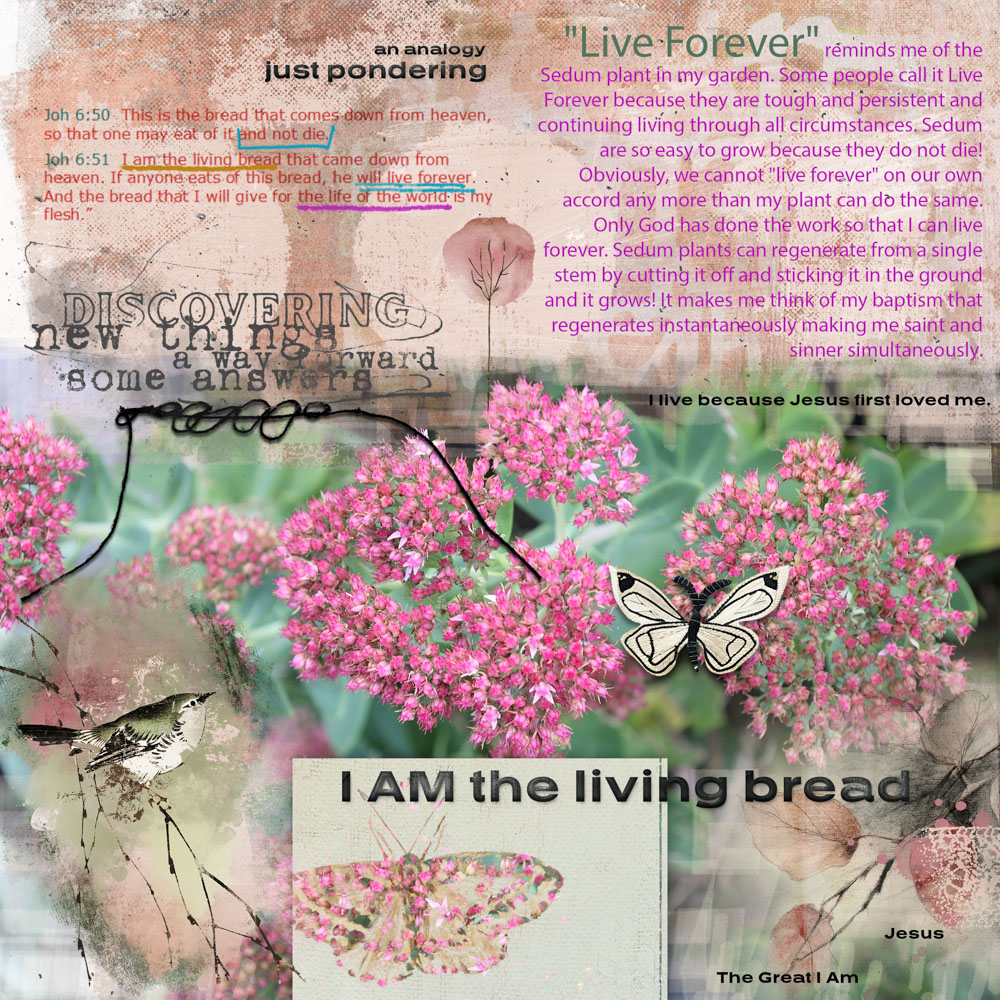
(6:51) Here Jesus emphasizes by repeating yet again, saying that He, Jesus, is the bread of life. Jesus really wants these people and us/me to understand it. The people in the Old Testament ate manna in the wilderness and they still died, but if we eat the bread of heaven, Jesus, His flesh, we will not die. This "living bread" is what we eat when we partake in communion, and the eating thereof is important because "we will live forever." However, at this time in Scripture, the Last Supper and the institution of Holy Communion has not happened. Jesus is referencing what "will" happen in that He will give his body and shed His blood on the cross. Jesus is foretelling what will happen, and then it becomes true.
These verses are a huge controversy amongst Christian denominations as to whether or not John 6 refers to Holy Communion or not. To me, Scripture interprets Scripture from the Old Testament through the New Testament. The Gospel of John is written to the church, us, and the people listening to Jesus in the moment would not have understood until later.
"Live Forever" reminds me of the Sedum plant in my garden. Some people call it Live Forever because they are tough and persistent and continuing living through all circumstances. Sedum are so easy to grow because they do not die! Obviously, we cannot "live forever" on our own accord any more than my plant can do the same. Only God has done the work so that I can live forever. Sedum plants can regenerate from a single stem by cutting it off and sticking it in the ground and it grows! It makes me think of my baptism that regenerates instantaneously making me saint and sinner simultaneously.
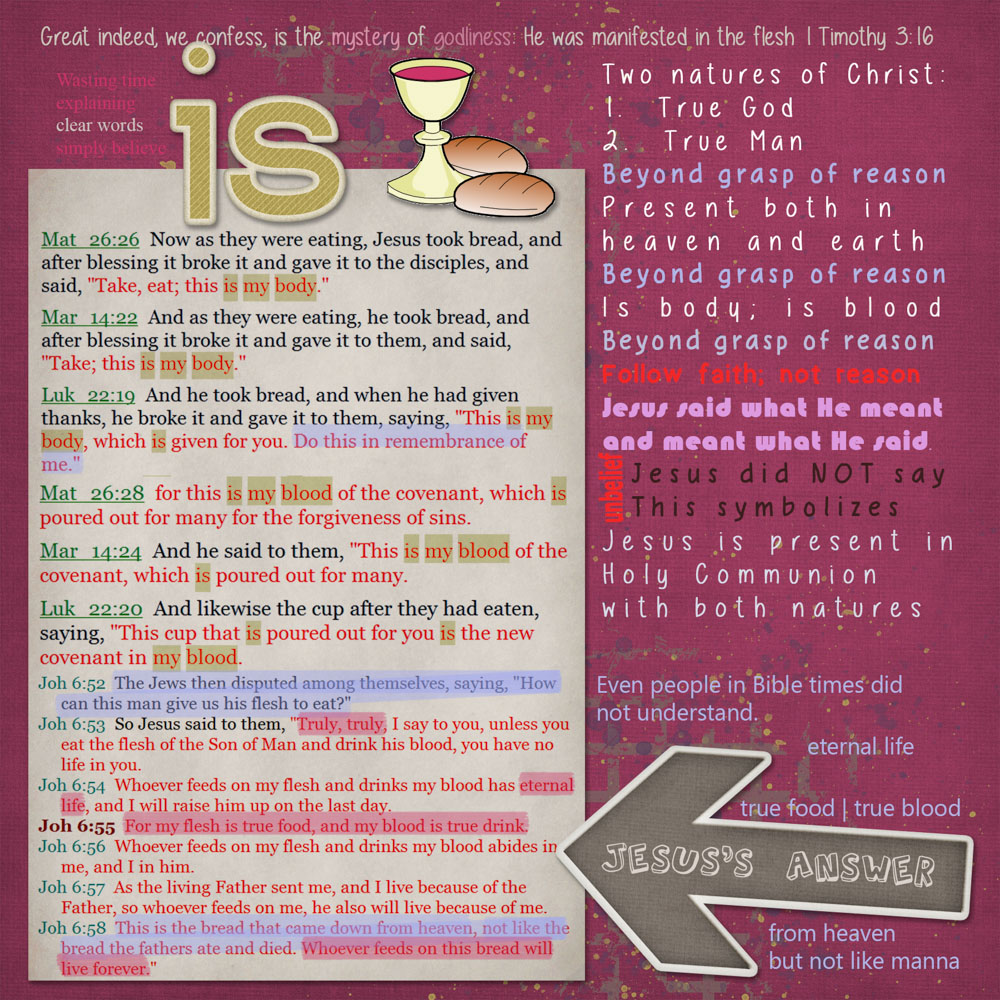
(6:52) The Jews exchanged their own views on what Jesus was saying to them with each other. I probably would have said the same thing as them, "How can I eat this man's flesh?" Ack! We don't eat other people! That's just not right!
(6:54) Jesus replies and confuses them even more by adding that they will also drink His blood! If you do not drink Jesus's blood, "you have no life in you." Jesus repeats himself again on the feeding and drinking and the raising up on the last day. Jesus repeats himself adding the word "true" food and drink. Jesus continues repeating the same thing in different ways, as a teacher would do to get his student to comprehend what is being taught. This time he uses the words "abide in me." Maybe they will understand that concept better than "believing in me." Then Jesus says it yet another way in that God the Father is living, so He lives, so if the people feed on the living, they will live because of Jesus. He then again repeats that these things He is talking about are the "bread that came down from heaven" (as Jesus was born a man, and is both man and God), but not like the people of the Old Testament who were just "man." Do you get it yet? If not, Jesus says it again that "Whoever feeds o this bread will live forever." Do you want to live forever? Jesus is telling us over and over again what to do!
(6:59) The scripture ends by wrapping it up that these things were all said inside the synagogue in Capernaum. That would mean that Jewish leaders in the church were also there questioning Jesus.
September 29, 2024