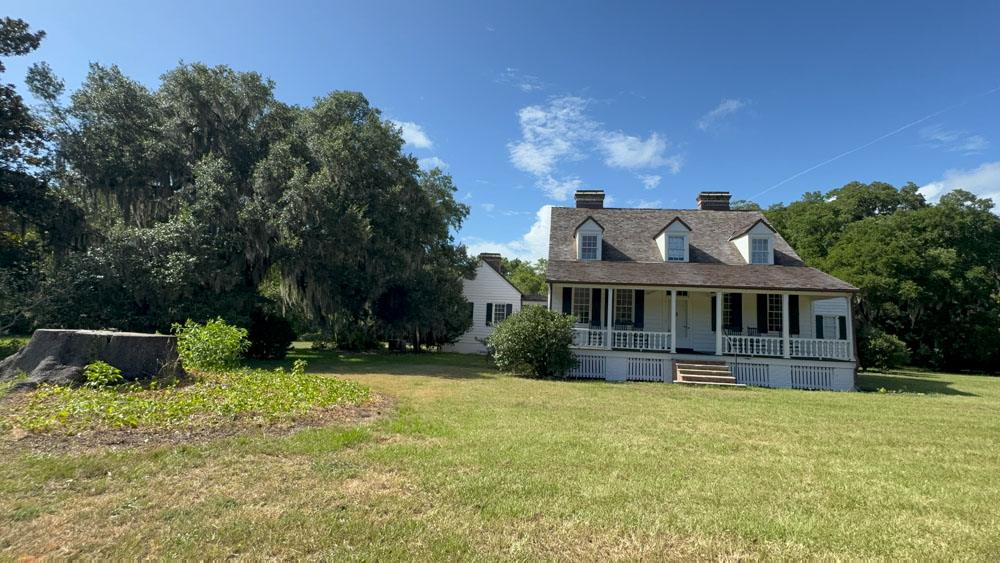
Charles Pinckney National Historic Site
The Charles Pinckney National Historic Site is right across the road from the Boone Hall Plantation and Gardens in Charleston, South Carolina. I find it interesting that the Boone land is now more commercialized and privately owned and the Pinckney land is now a nationally owned historic site. It was quiet the contrast. Both families were involved with the Rutledges in South Carolina, the Boones being direct ancestors of John and Edward Rutledge and the Pinckneys intermarrying with the Rutledges and the Middletons. All of these families were founding fathers of our country and important to the history of our country.
RUTLEDGES AND PINCKNEYS
John Rutledge (1713–1750) and Sarah Hext Rutledge were the parents of John Rutledge (1739 – 1800 - Constitution signer and writer), and Edward Rutledge (1749-1800 - Declaration signer), as well as Andrew (1740–1772), Thomas (1741–1783), Sarah (1742–1819), Hugh (1745–1811), Mary (1747–1832).
There are two "Charles Pinckneys" as our countries forefathers, who were second cousins, and both signed the U.S. Constitution!
1. Charles Cotesworth Pinckney (1746-1825) signed the U.S. Constitution. On September 28, 1773, he married Sarah Middleton, daughter of Henry Middleton. You see all of these families intermarried and we visited the Middleton Plantation as well. Edward Rutledge was in partnership with Charles C. Pinckney, investing in plantations, as well as his law partner.
2. Charles Pinckney (1757 - 1824) signed the U.S. Constitution as one of the youngest delegates of the Constitutional Convention. He was the son of Colonel Charles Pinckney and Frances Brewton, who bought Snee Farm plantation in 1754 and it remained in the family for over 60 years. The origin of the name "Snee Farm" is unknown, although the word "snee" means bounteous or plentiful in Olde English. In 1817 it was sold to pay debts. Charles (1757-1824) married Mary Eleanor Laurens in 1788 and they had three children, Frances Henrietta (Pinckney) Hayne; Mary Eleanor (Pinckney) Ramsay, and Henry L. Pinckney. In 1782, Colonel Pinckney died and bequeathed the Snee Farm to his son, Charles (1757-1824).
I HOPE TO FIGURE THIS OUT LATER.
This is driving me bezonkers trying to figure out how the Rutledges intermarried with the Pinckneys and is going to take more time!
I do have in a tree a (Generation 1) Frederick Wilkes Rutledge (1769-1824) who married Henrietta Pinckney Horry (1783-1858) who had a son (Generation 2) Frederick Rutledge (1800-1884), who married Henrietta Middleton (1803-1842), who had a daughter (Generation 3) Elizabeth Pinckney Rutledge (1830-1912). That's enough to twist my brain! I might be connected to these folks as I keep running into these people doing research, but I really do not know yet. (Of course, they all had more children, but I was focusing on the Pinckney names.)
I currently have 13 Pinckney names in my genealogy workings. For instance, there is a William Pinckney Rutledge (1850-1890) whose parents are James Rutledge (1785-1850) and Nancy Armstrong (1792-1832). He is born in Maury, Tennessee, which county some of my DNA seems to be connected to, but I have no idea why his parents named him with that middle name. I am only beginning to get into this research. That James Rutledge I found is certainly a different James Rutledge than my brick wall James born in 1790, although they were born in the same generation and had completely different family lines, so cannot be the same James.
I also have in my tree Reverend Charles Cotesworth Pinckney (1812-1898) who married Sarah Henrietta Rutledge (1832-1906) who seems to possibly be the son of the Charles Cotesworth Pinckney (1746-1825) listed above. Maybe that's the connection I'm looking for! Just to confuse you, they have a son named Edward Rutledge Pinckney (1870-1954.)

This informational board lists all of the accomplishments of Charles Pinckney.

The Snee family bought the property and the home, farm, and land where the slaves lived of this family are preserved, but the park is named after Charles Pinckney and his legacy is mentioned as well.
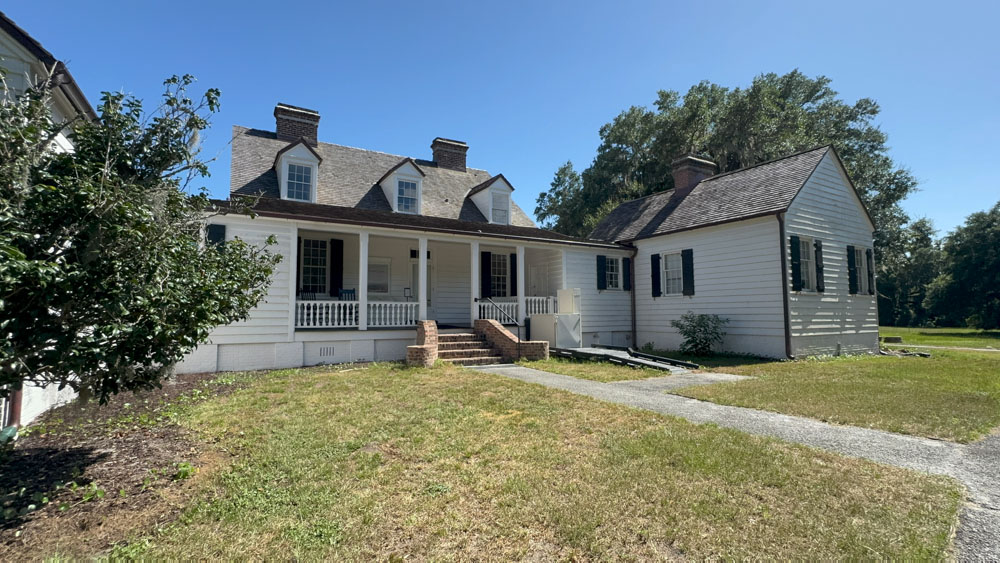
George Washington visited the plantation. This is the back of the home which is the entrance to the museum, but it was closed while we were there. The grounds were open for us to explore, however.


We decided to walk down the trail and enjoyed those Spanish Moss covered trees again.


There was a sign that said the slave residences were up this way, but we could not tell from where we stood. Once we made the loop on the trail and came out at the top of this field, we were able to see where the slaves lived.

The trail was almost a bit creepy!

It was certainly a unique trail for us as the vegetation was much different than we are used to with a mix of the Spanish Moss and palms.
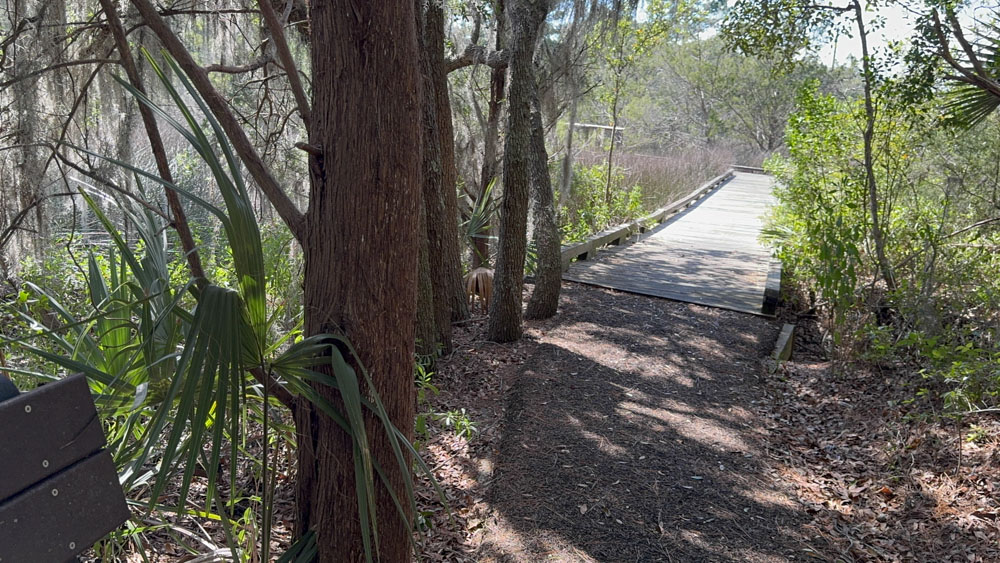
We came to a boardwalk.

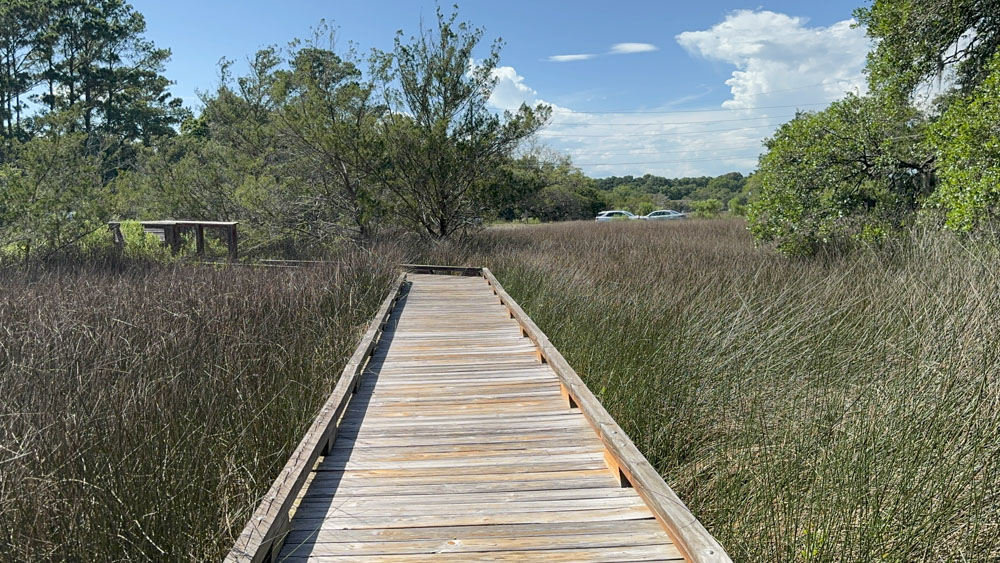
At the end of the boardwalk was a platform overlooking a dry creek which used to run water well and was used for transporting crop grown on the plantation.

We headed back on the boardwalk.

We turned right when we arrived back at that turn off which made a loop to the field where the slaves lived.


The markings for where the slaves lived is to the right of this photo and you can see the main house in the distance, so the family and the slaves were in eye view of each other when they were living here.

We walked across the field and back to the front of the house.

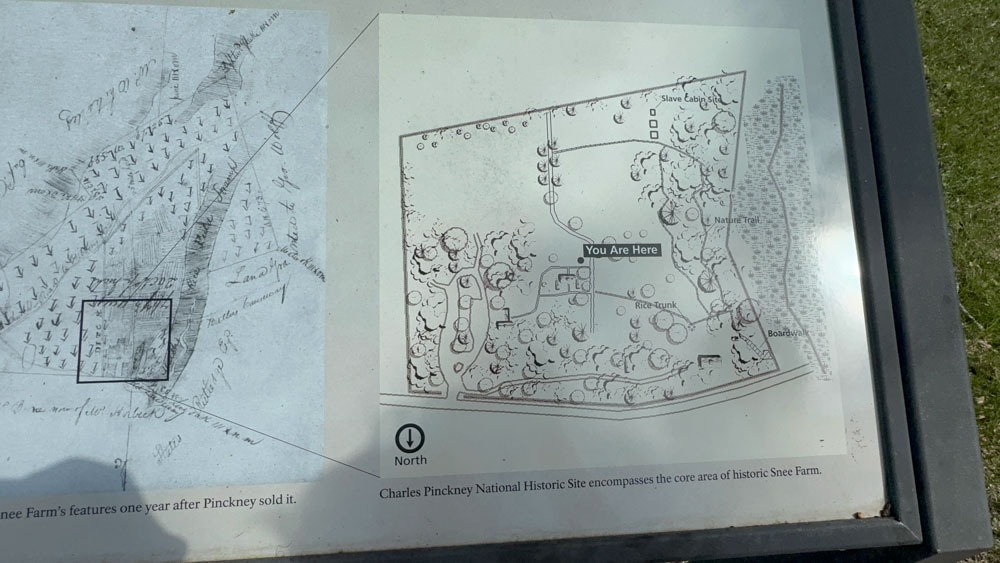
We found these informational boards with maps.